Vol. I  ·  No. 49
Sunday, November 22, 2026
🔍 Search  ·  237 stories in the archive

Front page › Credit & debt

Credit & debt

12 stories in the archive, newest first

Credit & debt

Should You Lease or Buy a Car? Compare the Real Cost, Not Just the Payment

A lower monthly lease payment doesn't always mean a cheaper car. Here's how to compare taxes, loan interest, resale value, mileage, fees and long-term ownership costs.

A woman and a man review a mobile phone and paperwork beside a silver SUV inside a car dealership.
Compare the full cost of leasing and buying—not just the monthly payment. Photo: Antoni Shkraba / Pexels

Car shoppers often begin with the same question: how much will the monthly payment be? That is a useful budgeting question, but it is not the same as asking what the vehicle will cost. A lease might advertise $425 a month while a purchase loan on the same car is more than $800. The lease feels cheaper. But the buyer may own a vehicle worth tens of thousands of dollars after three years, while the lessee usually returns the car.

The right comparison depends on how long you plan to drive, how many miles you put on the car, and whether you want to own it. The Consumer Financial Protection Bureau and Federal Trade Commission both encourage drivers to look at the actual terms and total charges instead of choosing a deal solely because the monthly payment fits a target.

THE BASIC DIFFERENCE. Buying means paying cash or taking out a loan to own the vehicle. You can usually drive as many miles as you like, sell it when you choose, and modify it subject to lender, warranty or other restrictions. You also absorb the risk that it depreciates faster than expected or requires expensive repairs. Leasing generally means paying to use a vehicle for an agreed term and mileage. The payment reflects expected depreciation, financing charges, taxes and fees. Return charges can apply for excess mileage and wear.

WHEN LEASING CAN BE A GOOD CHOICE. Leasing may appeal to drivers who want a new car every two to four years, expect fairly predictable mileage, prefer to stay closer to the manufacturer warranty period and value the ability to switch vehicles at a scheduled interval. Manufacturer-supported lease promotions can sometimes make particular models competitively priced. But promotion terms may require excellent credit, substantial money due at signing or strict annual mileage limits.

WHEN BUYING USUALLY DESERVES A CLOSE LOOK. Buying tends to fit someone who wants to keep a vehicle for five, seven or ten years, drives long distances, or expects family and work needs to change. A buyer is not subject to contractual lease-mileage penalties, though heavy mileage still reduces resale value. Ownership also gives the option to continue driving after the loan is paid off, often reducing later monthly cash outlays if maintenance remains manageable.

BEWARE OF THE MONTHLY-PAYMENT TRAP. A lease payment may be lower because you're paying for a portion of the vehicle's decline in value rather than financing the entire purchase price. An auto loan payment may be higher because it pays interest and reduces principal, leaving the buyer with an asset to keep or sell. Looking only at the two payments treats principal repayment as if it creates no value.

THE FAIR WAY TO COMPARE. Choose one period—say 36 months—and calculate both alternatives over those same 36 months. For buying, add the cash down payment, purchase and financing costs, payments, insurance, maintenance and sale expenses, then subtract the expected value of the vehicle and add any unpaid loan balance at sale. For leasing, add cash due at signing, monthly payments, taxes, insurance, maintenance and realistic end-of-lease charges. Compare net cost, not just cash paid.

A THREE-YEAR EXAMPLE. Suppose a car costs $42,000. The buyer pays $5,000 down, finances the balance after an illustrative 8% purchase tax and $650 in dealer fees, and takes a 60-month loan at 6.5% APR. The financed balance is $41,010 and the payment is approximately $802 a month. After 36 payments, about $18,013 remains on the loan. If the car could be sold for $29,000, the buyer's net proceeds after paying off the loan would be about $10,987.

Allow $1,200 of maintenance and $160 per month for insurance over the 36 months, with no additional selling costs or fuel differences. The buyer's estimated three-year net cost is about $29,860. That is not the sum of the loan payments alone; it includes the initial cash, ongoing costs, and the value recovered through a sale.

Now compare an illustrative lease on an equivalent car: $425 a month before an 8% monthly-payment tax, $3,000 of down payment and $1,100 of additional upfront nonpayment fees. Add $180 a month in insurance, $450 in total maintenance, $400 disposition fee, and $500 in excess wear. If the driver travels 13,000 miles annually but the lease allows 12,000 and charges $0.25 per extra mile, that adds $750 across three years. The estimated three-year lease cost is about $29,204.

Under those particular assumptions, leasing wins by only about $656 over three years—a very narrow difference compared with the uncertainty in resale values, repairs, mileage and insurance. The buyer's estimated resale value of $29,000 is especially important. If resale is $3,000 higher than anticipated, buying becomes markedly cheaper. If it's $3,000 lower, leasing may look more attractive.

These are hypothetical values for teaching the calculation, not real quotes, forecasts, or a recommendation. Real leases may tax or finance costs differently, include rebates, or have very different money factors and residual values. The numbers do not assign value to flexibility, risks of early termination or cash that could have been invested elsewhere.

DOWN PAYMENTS MATTER ON BOTH SIDES. A dealer may promote a low lease payment that requires thousands in 'due at signing' charges. Ask which part is the first monthly payment, which is a nonrefundable capitalized cost reduction, which is tax or fee, and whether any amount is a refundable security deposit. Don't count the first monthly payment twice when running the math. Also consider the risk of putting substantial cash into a leased vehicle if it is stolen or declared a total loss early in the contract.

MILEAGE RULES CAN CHANGE THE ANSWER. Lease offers frequently include allowances such as 10,000, 12,000 or 15,000 miles per year. Driving 5,000 excess miles at $0.25 a mile could add $1,250 at return. Ask about the exact contractual rate, tire and body-condition standards, and whether extra miles can be purchased in advance. Buying doesn't eliminate the economic cost of heavy mileage, but it avoids a predetermined per-mile contractual charge.

WEAR, DAMAGE AND EARLY EXIT FEES. Leasing companies can charge for condition beyond what the contract considers normal wear, and some assess a disposition fee when the vehicle is returned. Ending a lease early may be expensive. The FTC urges consumers to review mileage caps, insurance requirements, return standards and early termination provisions before signing. A job change, a growing family or an unexpectedly long commute can make a formerly attractive lease difficult to keep.

THE LOAN TERM CAN HIDE COSTS, TOO. Financing a purchase for 72 or 84 months can reduce the monthly bill, but the CFPB warns that longer terms often increase total interest and make it more likely the borrower owes more than the vehicle is worth. A dealer's low monthly offer is not useful without the price, APR, financed amount, loan term and total interest cost.

DEPRECIATION IS THE BIGGEST WILDCARD. Cars decline in value at different rates depending on model, mileage, condition, competition and market demand. High resale value helps buyers who sell after a few years. Poor resale performance can make a subsidized lease attractive—provided the contract's price and fees actually reflect that advantage. Obtain realistic independent resale estimates, and test a pessimistic scenario rather than assuming the dealer's forecast is certain.

WHAT IF YOU KEEP CARS FOR EIGHT YEARS? The comparison often changes substantially. A purchased car may eventually be paid off, while someone who continually leases is likely to make a new down payment, pay fees and begin another sequence of monthly payments. Consumer Reports notes that, in many cases, buying and keeping a car longer is less expensive than repeating short leases. But repairs and replacement needs can still alter the calculation.

LEASE BUYOUTS ARE A SEPARATE DECISION. Most closed-end personal leases offer some path to return or purchase, but the buyout price and applicable fees should be checked in the actual contract. Buying out a lease may generate additional sales tax and financing costs. In California, the state tax agency explains that purchasing a car at the end of its lease is generally a taxable purchase. Do not assume the residual price is automatically a bargain.

STATE TAX RULES DIFFER. A vehicle purchase commonly involves sales or use tax on its purchase price, while taxes on leasing can be collected on payments or handled in other ways depending on the jurisdiction. California generally has rules allowing tax on rental receipts in specified vehicle lease circumstances. A national calculator cannot determine tax liability from your ZIP code alone; use the dealer's legally itemized quote rather than a generic tax assumption.

WHAT ABOUT ELECTRIC VEHICLES? For EV shoppers, compare price, manufacturer or dealer lease incentives, financing promotions, insurance, charging equipment, electricity costs and resale uncertainty. As of November 2026, the IRS states that the federal new and previously owned clean-vehicle credits generally are not available for vehicles acquired after September 30, 2025. Do not let an outdated online article showing a $7,500 consumer EV credit decide a new lease-versus-buy comparison.

THE NEW CAR LOAN INTEREST DEDUCTION. Federal law allows certain taxpayers to deduct up to $10,000 a year of qualifying interest on loans for new, U.S.-assembled personal vehicles for tax years 2025 through 2028, subject to eligibility requirements and income phaseouts. The IRS lists modified adjusted income thresholds of $100,000 for individuals and $200,000 for joint filers. Lease financing itself does not qualify for the personal auto-loan interest deduction. Because eligibility is highly specific, the calculator deliberately excludes tax benefits rather than assuming every buyer receives one.

BUSINESS USE IS ANOTHER QUESTION. Someone using a car partly for a business may face different deduction methods, substantiation requirements and leasing rules. The IRS explains that personal commuting is not business mileage, and the tax treatment of owned and leased vehicles differs. Do not choose an expensive vehicle primarily to chase a deduction that may not apply to your actual use.

MAKE THE DEALERS COMPETE ON THE FULL QUOTE. Ask for the negotiated vehicle price; itemized taxes and dealer charges; the APR and loan amount for a purchase; the agreed-upon value, adjusted cap cost, money factor or rent charge, residual, mileage allowance and total due at signing for a lease; and all return or buyout charges. Get an insurance quote before signing. Consider a preapproved auto loan from a bank or credit union so you can evaluate dealer financing independently.

WHO SHOULD LEASE? A predictable low-mileage driver who wants regular upgrades, can tolerate the contractual restrictions, and has an unusually competitive lease promotion may find leasing economically reasonable. WHO SHOULD BUY? Someone who wants to keep a dependable vehicle for many years, frequently exceeds lease-mileage allowances, values ownership and flexibility or wants lower costs after the loan is paid off should examine buying carefully. Neither answer is universal.

THE FINANCE UNC CALCULATOR. Our Lease vs. Buy Car Calculator takes purchase price, tax, loan APR, down payment and expected resale value, then compares them with lease payment, signing charges, mileage penalties, maintenance, insurance and estimated end-of-term fees. Both paths use the same comparison period. It also estimates the resale value at which buying would break even against the lease.

THE FINANCE UNC TAKEAWAY. A car is usually a major household expense, not a financial asset that reliably grows in value. Buy or lease based on the full cost of using the vehicle, your expected mileage, the likelihood that your needs will change and how long you'll keep it. A $400 lease isn't automatically cheaper than an $800 purchase loan, just as buying isn't always smarter than an unusually well-priced lease. Get the numbers, compare identical periods, test resale assumptions and choose the arrangement that fits your finances.

Try the calculator: https://www.financeunc.com/tools/lease-vs-buy-car/

This article provides general consumer-finance education, not individualized tax, legal or financing advice. Vehicle contract terms, tax treatment, mileage policies, rebates and insurance vary. The illustrations are hypothetical, and a projected resale price is not guaranteed.

Sources

Credit & debt

FDIC Proposes Easier Treatment of Custodial Deposits for Smaller Banks

The proposal carries out part of the ROAD to Housing Act and could change how banks and fintech apps share deposits.

A granite wall with the words Federal Deposit Insurance Corporation, the agency's bronze seal and the address 550 17th Street, beside a glass entrance.
File photo: the entrance to the FDIC's headquarters at 550 17th Street NW in Washington, in May 2025. Photo: G. Edward Johnson, CC BY 4.0, via Wikimedia Commons

The Federal Deposit Insurance Corporation's board has approved a proposed rule on custodial deposits, the money a fintech app, broker or other company places at a bank on behalf of its customers. The FDIC says the proposal carries out part of the 21st Century ROAD to Housing Act. The board acted by notation vote on Nov. 17.

Under the proposal, some custodial deposits at banks with less than $10 billion in assets would no longer be counted as brokered deposits, according to IndexBox and American Banker. Brokered deposits face extra restrictions under the FDIC's rules. PYMNTS reported that the proposal also spells out how banks can pay the fintech companies they partner with in these arrangements.

For people who keep money in a fintech app that places it at a bank, nothing changes unless the rule is finalized. The FDIC is taking public comments on the proposal first.

At the same meeting, the board kept the designated reserve ratio for the Deposit Insurance Fund at 2 percent for 2027, the ABA Banking Journal reported. Separately, the FDIC, the Federal Reserve, the Comptroller of the Currency and the NCUA extended to Dec. 16 the comment period on proposed guidance for how banks manage risks from outside vendors and partners, including a guide written for community banks.

Sources

Credit & debt

Watch: Ramsey on average debt, PBS's Two Cents on card rewards

A look at what Americans owe in 2026, and whether credit card rewards are worth chasing.

The Ramsey Show, Debt Levels Of The Average American In 2026 (Nov. 18). Includes sponsored segments or affiliate links. The Ramsey Show on YouTube

The Ramsey Show's hosts go through how much the average American owes in 2026 and give their view on it, which reflects Ramsey Solutions' own debt-payoff approach; the video's description carries sponsored or referral links, and Ramsey Solutions sells its own courses and products. PBS's Two Cents asks whether credit card rewards are worth it. For context, the New York Fed reported household debt of $19.1 trillion in the third quarter, including $1.29 trillion on credit cards.

Hosts' opinions are their own; this is not financial advice, so check how any account or rule applies to your situation. Creators don't pay to be featured, and we note sponsored segments and referral links.

Sources

Credit & debt

FDIC Approves OneMain's Plan to Open a Utah Industrial Bank

The personal-loan lender expects its bank to open in about a year, funded mainly by brokered deposits.

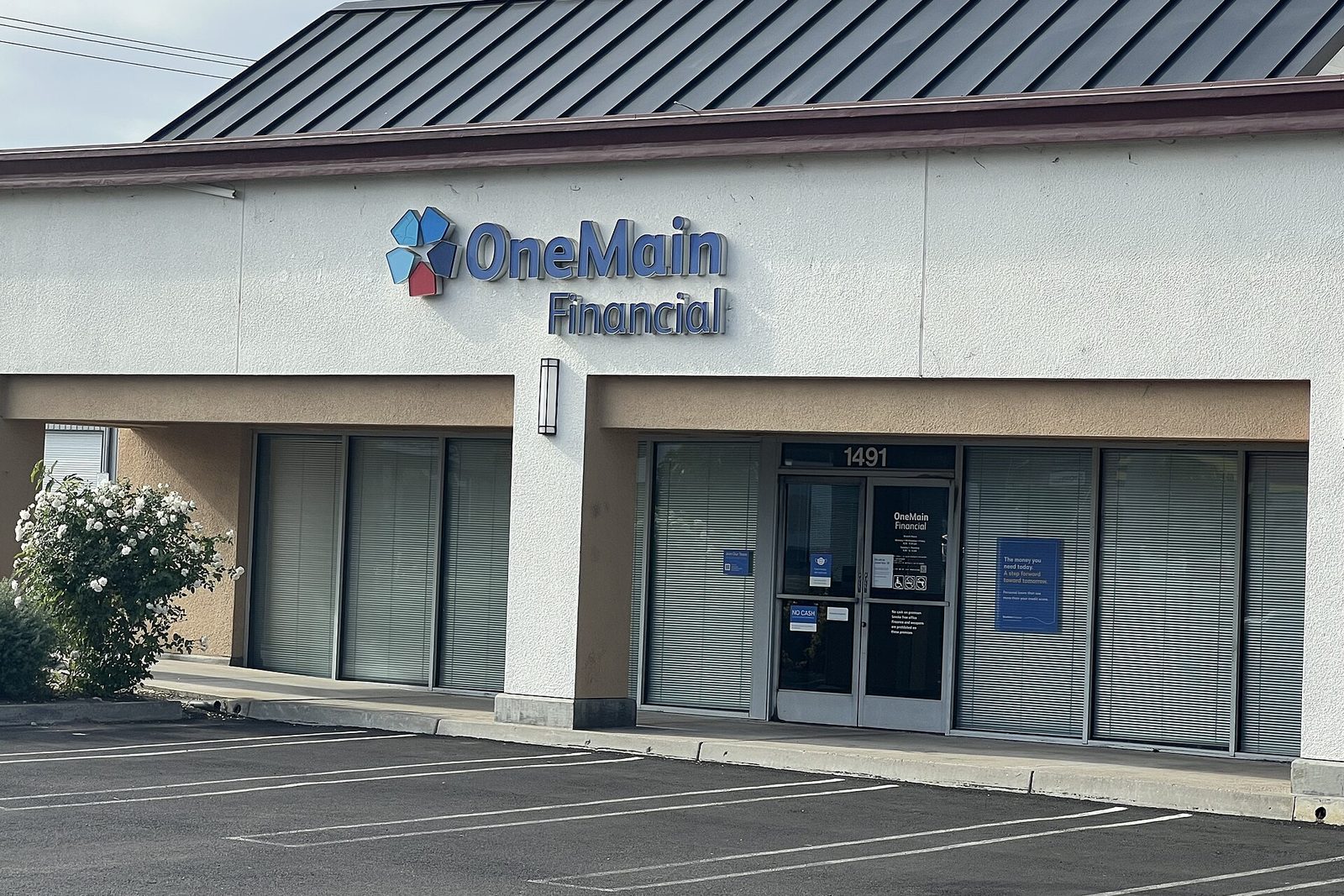
A OneMain Financial branch in a strip mall, with the company's name above the glass door.
File photo: a OneMain Financial branch in Manteca, California, in November 2024. Photo: TaurusEmerald, CC BY-SA 4.0, via Wikimedia Commons

The Federal Deposit Insurance Corporation and Utah's Department of Financial Institutions approved OneMain's applications to set up OneMain Bank, a Utah-chartered industrial bank whose deposits will be federally insured, the company said Tuesday. OneMain, a consumer lender, said it expects to open the bank in about a year and offer personal loans, auto financing and credit cards nationwide.

The bank, also called an industrial loan company, will be wholly owned by OneMain Finance Corporation, which is owned by OneMain Holdings. According to the FDIC's approval as reported by Yahoo Finance, OneMain Bank will be funded mainly by brokered deposits plus a small amount of retail savings deposits, must keep a 15 percent leverage ratio, must have a board with a majority of independent directors, and may not open branches or subsidiaries during its start-up period. The parent companies agreed to back its capital and liquidity.

The approval drew objections. The National Community Reinvestment Coalition had urged the FDIC to be "skeptical" of such charters for high-cost consumer lenders, and 13 state attorneys general led by New York's Letitia James sued OneMain in March over add-on products sold with its loans. In 2023, the Consumer Financial Protection Bureau ordered OneMain to pay a $10 million penalty and refund $10 million to about 25,000 customers; the company did not admit wrongdoing.

OneMain chief executive Doug Shulman called the approvals "another milestone" for the company.

Sources

Credit & debt

How to Maximize Credit Card Points Without Spending More

A practical guide to welcome bonuses, reward stacking, cash-back comparisons and smarter travel redemptions—without letting points dictate your spending.

Painted illustration of hands holding two credit cards over a notebook with a checklist, a calculator and a passport, with icons for points, flights, hotels and luggage above them and a seaside town through the window.
AI-generated editorial illustration of planning how to use credit card points. Illustration

Credit card rewards sound simple: spend money, earn points, redeem them for something useful. The hard part is determining whether the rewards actually leave you better off. A card can generate thousands of points while costing more in annual fees, interest, processing charges or unnecessary spending than those points are worth.

Finance Unc reviewed card issuer rules, Consumer Financial Protection Bureau findings, research published by points-focused outlets such as The Points Guy, and experiences shared in Reddit's r/CreditCards and r/awardtravel communities. The pattern is clear: earning points efficiently matters, but measuring what those points actually save matters more. The most practical approach is a cash-back foundation, carefully timed welcome bonuses, eligible reward stacking and selective travel transfers.

START WITH THE 2 PERCENT BENCHMARK. A no-annual-fee card earning 2 percent cash back on eligible purchases is a useful comparison point, not a promise that every consumer can get that rate. On $30,000 of annual card purchases, 1 percent earns $300, 2 percent earns $600 and a 3 percent effective return earns $900. A more complex points strategy needs to deliver benefits that genuinely exceed the simpler alternative after fees and effort.

A card producing $900 in usable yearly rewards but costing $395 in annual fees leaves $505 before other costs. That is less than $600 of straightforward cash back. Travel credits, lounges or insurance benefits may change the calculation, but only if you would otherwise pay for those benefits or realistically use them. A coupon for a service you did not want is not the same as cash.

DON'T CONFUSE POINTS WITH DOLLARS. Rewards currencies have different cash-out options and different values when exchanged for airline or hotel benefits. Publications such as The Points Guy estimate cents-per-point values using travel redemptions, but those estimates are not guaranteed cash values and should not be treated as product recommendations. Finance Unc's benchmark is the real, comparable price a reader would otherwise pay.

The effective return is the points earned per dollar multiplied by the usable redemption value per point. For example, two points per dollar redeemed at 1 cent per point equal a 2 percent return; at 1.5 cents, the return is 3 percent; at 2 cents, 4 percent. But if a program gives only 0.6 cents per point for the redemption you can actually use, the same earning rate returns just 1.2 percent. Program changes can erode value while points sit unused.

WELCOME BONUSES CAN OUTWEIGH EVERYDAY EARNING. Suppose a hypothetical card offers 75,000 bonus points after $5,000 in eligible spending within three months. At an illustrative redemption value of 1.5 cents each, the bonus represents $1,125 before annual fees and other costs. The same $5,000 on a 2 percent cash-back card produces $100. The much larger bonus is attractive only if the spending was already planned and the cardholder can pay the balance in full.

Useful periods to pursue a bonus include a scheduled home repair, an insurance renewal, essential equipment purchases or other eligible household and business expenses. Do not buy items you would not otherwise purchase just to meet a threshold. Issuers can impose eligibility restrictions based on prior accounts, recent openings and previous bonuses. The widely discussed Chase 5/24 guideline is not a guarantee of approval or denial; current application terms and issuer decisions govern.

STACK INDEPENDENT REWARDS ON THE SAME PURCHASE. Some legitimate transactions qualify for credit card rewards, an online shopping portal rebate and a targeted card-linked merchant offer. On a hypothetical $500 purchase, 2 percent card rewards would yield $10, a 5 percent portal rebate $25 and a compatible $20 merchant credit would add up to $55, an 11 percent return. This example assumes the promotions are available, compatible and successfully tracked; it is not an advertised offer.

First compare retailer prices without considering points. Then check portal rates, activate a compatible issuer offer and follow each promotion's requirements before paying with the eligible card. A portal rebate may exclude taxes, gift cards or particular products. A coupon code or different shopping link can invalidate tracking. If a retailer is 15 percent more expensive, its 10 percent rebate does not make it the better deal.

OTHER LOW-FRICTION OPPORTUNITIES. Participating airline dining programs may award extra miles on restaurant transactions made with a registered payment card, while that card separately earns its normal dining rewards. Rotating-category cards may offer higher cash-back rates for a limited period, usually with activation and spending caps. Approved referral bonuses can add value, but offers vary and a referral is not a reason for somebody to apply for an unsuitable card.

HOUSEHOLDS MAY BE ABLE TO COORDINATE POINTS. Chase says eligible Ultimate Rewards members can combine points between their own cards or with one person sharing the same household address. This can help family members consolidate balances and, depending on the card, access different redemption choices. Each person's applications and bonus eligibility are separate. Pooling is not available across every issuer, and the correct choice depends on the rules of the specific accounts.

LARGE BILLS REQUIRE FEE MATH. The IRS lists a 1.75 percent fee through Pay1040 for eligible consumer credit card tax payments as of November 16, 2026; commercial cards can incur a higher fee, and other processors charge different amounts. Paying a $10,000 eligible federal tax bill with a card earning 2 percent cash back would produce $200 in rewards but incur $175 in processing fees, leaving a $25 net benefit before any other costs. Not all tax obligations can be paid by card.

A processing fee may be justified if a legitimate payment helps earn a welcome bonus that otherwise could not be reached through fee-free purchases. But the relevant benefit is the incremental bonus you would miss, not the entire points balance. Check the processor's actual fee, issuer reward eligibility, payment limits and whether the transaction affects any welcome-bonus requirements. Never incur credit card interest to chase this return.

HOW TO CALCULATE A REDEMPTION. Cents per point equals (comparable cash price minus unavoidable award taxes and fees) divided by points used, multiplied by 100. A $600 flight booked for 30,000 points plus $11.20 in required charges appears to deliver about 1.96 cents per point. If a comparable flight on the same dates costs $450, however, the practical value falls to about 1.46 cents. Also consider rewards you would earn from purchasing the cash fare.

Be particularly careful with premium-cabin travel. A $5,000 business-class seat that costs 100,000 points can appear to return 5 cents per point before charges. But if you would otherwise have booked an $800 economy ticket, it is misleading to call the entire $5,000 a household saving. The upgrade may be an excellent personal experience; its luxury value and its avoided spending are different measurements.

TRANSFER POINTS ONLY AFTER FINDING AN AWARD. Transferable rewards can be useful when the same airline flight or hotel stay costs fewer points through a partner program. Search award availability first, compare the true cash alternatives, account for taxes and fees, confirm the conversion ratio and transfer only the required amount. Chase says travel-partner transfers are final, may take several business days and generally happen in increments of 1,000 points.

Program rules are not permanent. Chase's published Sapphire Preferred benefits say its World of Hyatt transfer ratio is now 4 Ultimate Rewards points to 3 Hyatt points. Cardholders who opened before June 15, 2026 had retained 1:1 transfers only through September 30, 2026. That means 30,000 Hyatt points require 40,000 Chase points from an affected account, rather than 30,000 under the earlier ratio. Always check your own card's current terms; a premium card retaining better transfer terms may not justify its annual fee.

WHAT REDDIT ADDS TO THE DISCUSSION. Credit card enthusiasts disagree about the best path. Some report high-value trips through intensive bonus hunting and award research; others favor cash back because it is predictable, can be saved or invested and does not depend on elusive award seats. Their experiences are useful illustrations, not representative data or promises of the same results. The common caution is that flexibility and research time are real costs.

A traveler tied to school holidays or fixed work dates may get less value from transfer partners than someone willing to fly midweek or change airports. Constantly monitoring availability to save a modest amount can also defeat the purpose of a personal-finance strategy. Choose rewards that fit normal life, rather than arranging life around rewards.

THE SO-CALLED LOOPHOLES ARE OFTEN EXCLUSIONS. Manufactured-spending methods involving gift cards, prepaid reloads, cash equivalents and repeated payment cycles can violate rewards terms and trigger missing points, clawbacks or account restrictions. American Express explicitly excludes cash equivalents, gift card purchases, person-to-person transfers and prepaid-card reloads from eligible rewards purchases under its published guidance. Returns generally offset eligible spending. Do not misrepresent purchases, invent invoices or buy items solely to return them after rewards post.

Consumer complaints show that rewards programs carry practical risks beyond deliberately abusive tactics. The Consumer Financial Protection Bureau identified unexpected promotion conditions, devaluations, redemption obstacles and revoked rewards among recurring complaints. Preserve confirmations for larger promotions and confirm that rewards post, especially when stacking multiple offers.

A SIMPLE 30-DAY PLAN. In week one, list every card's fee, regular earning rate, promotional categories, unused balance and benefits actually used. In week two, total household spending by major category and compare the current return with a 2 percent cash-back baseline. In week three, try stacking on one genuine planned online purchase, and keep receipts and offer confirmations. In week four, evaluate any planned travel redemption using a comparable cash itinerary and review whether an upcoming legitimate expense makes a welcome bonus worthwhile.

WHO BENEFITS MOST? Occasional travelers with fixed dates often benefit from predictable cash back. Flexible travelers who enjoy comparing awards may benefit from transferable points. Larger households and legitimate small-business purchasers may have more opportunities for eligible spending bonuses, but business and personal transactions must be recorded accurately and cards evaluated on their own terms. Anyone carrying a high-interest balance generally gains much more by reducing interest than by chasing points.

THE FINANCE UNC TAKEAWAY. The best credit card strategy is not a contest to accumulate the largest points balance. Use rewards to reduce costs on purchases that would happen anyway. Start with a simple baseline, pursue bonuses selectively, stack compatible offers, measure redemptions against realistic cash alternatives and avoid turning rewards into a reason to overspend. The most valuable points are the ones that make your actual finances better.

This guide provides general financial education, not individualized credit or tax advice. Offers, rules and award availability can change; confirm current terms with the bank, merchant, airline, loyalty program or IRS before acting.

Sources

Credit & debt

Watch: The Ramsey Show on callers buried in student debt

A compilation of Ramsey Show calls about college loans, and NerdWallet on money red flags in relationships.

The Ramsey Show, 25 Minutes of People Drowning In College Debt (Nov. 13). The Ramsey Show on YouTube

Callers to The Ramsey Show describe student loan balances they are struggling to pay down, with the hosts' advice, which reflects Ramsey Solutions' own debt-payoff approach. NerdWallet asks people on the street what money habits worry them in a partner. Both videos' descriptions carry sponsored or referral links, and Ramsey Solutions sells its own courses and products. For context, the New York Fed reported this week that household debt reached $19.1 trillion in the third quarter.

Hosts' opinions are their own; this is not financial advice, so check how any account or rule applies to your situation. Creators don't pay to be featured, and we note sponsored segments and referral links.

Sources

Credit & debt

Credit Reports and Credit Scores, Explained

What the three bureaus keep on you, how to see it free every week, how long bad marks last and how to fix mistakes or freeze your file.

A credit report is a record of how you have borrowed and repaid. Three nationwide credit bureaus, Equifax, Experian and TransUnion, collect that information from lenders and keep it up to date. Lenders, landlords, insurers and some employers use it to decide whether to do business with you and on what terms.

You can see your reports free. Federal law gives you one free report from each bureau every 12 months, and the bureaus have permanently extended a program that lets you check each report once a week at no cost, the Federal Trade Commission says. The only authorized site is AnnualCreditReport.com; you can also call 1-877-322-8228. The FTC advises against going to the three bureaus individually for these free reports.

A credit score is a number calculated from your report. The Consumer Financial Protection Bureau describes it as "a prediction of your credit behavior, such as how likely you are to pay a loan back on time." Scoring models typically weigh your payment history, how much you owe, how much of your available credit you are using, how long your accounts have been open, the mix of accounts, recent applications for new credit, and any collections, foreclosure or bankruptcy and how long ago they happened. You have many scores, not one, because lenders use different models.

Most negative information stays on a report for seven years, the CFPB says. Bankruptcies can stay up to 10 years. Lawsuits and judgments stay seven years or until the statute of limitations runs out, whichever is longer. Those limits don't apply when a report is pulled for a job paying more than $75,000 a year or for more than $150,000 of credit or life insurance.

If something on your report is wrong, dispute it with the bureau that shows it and with the company that supplied the information. The FTC suggests a written explanation, copies of your documents and the report with the errors circled. The bureau generally has 30 days to investigate. If the record changes, you get a free copy of the updated report, which doesn't count toward your free annual one.

A credit freeze stops anyone, including you, from opening new credit in your name until you lift it. It is free to place and lift, lasts until you remove it, and must be set at each of the three bureaus. A fraud alert is lighter: lenders must take extra steps to verify your identity. You contact one bureau, which tells the other two. An initial alert lasts a year and can be renewed; an extended alert, for identity-theft victims with an FTC or police report, lasts seven years.

This guide explains how the system works; it isn't advice about any particular lender or product.

Sources

notice U.S. household debt (NY Fed)Nationwide$19.1 trillion in Q3 2026, up $334B; credit cards $1.29T; 5.0% delinquent (released Nov 10)checked Nov 13

Credit & debt

Household Debt Reaches $19.1 Trillion as Mortgage Balances Climb

The New York Fed's quarterly report shows debt up 1.8 percent in the third quarter, with 5 percent of it in some stage of delinquency.

Americans owed $19.1 trillion at the end of September, up $334 billion, or 1.8 percent, from the end of June, the Federal Reserve Bank of New York said November 10 in its Household Debt and Credit Report for the third quarter of 2026.

Mortgages drove most of the increase. Mortgage balances rose $257 billion to $13.4 trillion, and home equity lines of credit rose $23 billion to $481 billion. Credit card balances rose $22 billion to $1.29 trillion, auto loans $21 billion to $1.73 trillion and student loans $5 billion to $1.66 trillion.

Five percent of outstanding debt was in some stage of delinquency, up 0.3 percentage points from the second quarter.

"Household debt levels rose moderately, led by increases in mortgage and home equity line of credit originations," said Donghoon Lee, an economic research advisor at the New York Fed. He said delinquency transition rates on housing debt have risen but that "the overall credit quality of these loans remains strong."

Sources

Credit & debt

FDIC Proposes Dropping a Recordkeeping Rule for Banks With Two Million Accounts

The FDIC board approved a proposal to rescind its "part 370" rule, which requires banks with two million or more deposit accounts to build and maintain systems to calculate deposit insurance coverage if they fail, and to move those banks under a separate, lighter rule (section 360.9). The FDIC says the change would not materially impede its ability to calculate insurance; deposit insurance limits are unchanged. Comments are due 60 days after publication in the Federal Register.

Sources

Credit & debt

About One in Four Americans With Credit Records Have Debt in Collections

Roughly 24 percent of people with a credit record have debt in collections, up from just under 23 percent in 2025, with a median balance of $2,913, according to an Urban Institute analysis of more than 10 million credit records reported by CBS News on November 10. In communities of color the share is 30 percent. About 3 percent have medical debt in collections, with a median of $1,492, and roughly 16 percent of student loan borrowers are behind. Louisiana has the highest share of people with debt in collections. Fifteen states bar providers from reporting medical debt to credit bureaus, CBS reports.

Sources

Credit & debt

Average New-Vehicle Price Hits a Record $51,109

Painted illustration of a frustrated buyer at a dealership desk as a salesman shows an auto financing sheet, with a gray SUV behind them priced at $51,109.
AI-generated editorial illustration of record new-vehicle prices. Illustration

The average transaction price for a new vehicle reached a record $51,109, about $500 above the December 2025 high and 2.1 percent more than a year earlier, according to a Kelley Blue Book report released Tuesday, November 10, NPR reports. The average used car costs close to $27,000, up 6 percent, Cox Automotive says. Edmunds found buyers financed an average of $44,664 last quarter, and that more than a quarter took loans of 84 months or longer; it puts average auto loan rates at about 11 percent for used vehicles and over 7 percent for new ones.

Sources

advisory SAVE plan borrowers: choose a new repayment planNationwideDeadlines vary by notice date; notices due to all borrowers by end of 2026checked Nov 9

Credit & debt

SAVE Student Loan Deadlines Are Arriving in Waves Through Early 2027

Borrowers who don't pick a new plan by their notice deadline are moved to a standard plan, usually with a higher payment.

The Education Department is ending the SAVE income-driven repayment plan and sending its borrowers notices in waves every few weeks, so each borrower's deadline to choose a new plan depends on when their notice arrived, Forbes reports. The first group, whose 90-day notices went out July 1, faced a final deadline of October 29 after the department added a 30-day final notice. All SAVE borrowers should have their 90-day notices by the end of 2026, so the last deadlines may fall around March or April 2027, Forbes estimates.

Borrowers who do not choose are placed in a plan automatically, the department says: the Standard Repayment Plan for loans first taken out before July 1, 2026 (or a consolidation standard plan of up to 30 years), or the new Tiered Standard Plan for loans or consolidations made on or after that date. Standard payments are generally higher than income-driven ones and generally do not count toward forgiveness. Servicers must give at least 21 days' notice before the first payment on a new plan is due, and borrowers on autopay may see the higher amount withdrawn unless they change it.

Options include applying for an income-driven plan such as Income-Based Repayment or the new Repayment Assistance Plan during the notice period, and switching before a notice arrives. "You do not have to wait until you receive your notice to switch plans," the National Consumer Law Center says. If an application is not processed by the new billing date, a processing forbearance of up to 60 days is available and can count toward Public Service Loan Forgiveness. Other forbearances can pause payments but interest keeps accruing; the NCLC calls them "a temporary fix, not a long-term solution."

Forbes, citing other reporting, says the department is working with Treasury and private debt collectors to take wages, benefits and tax refunds from borrowers in default. Separately, the temporary 1-percentage-point interest rate cut for enrolling in autopay is open until December 31, Newsweek reported in October.

Sources