Vol. I  ·  No. 49
Sunday, November 22, 2026
🔍 Search  ·  237 stories in the archive

Front page › Back issues › Tuesday, November 17, 2026

Tuesday, November 17, 2026

16 stories in this edition

Investing

Nvidia's Revenue Doubles to $115.8 Billion in Its First Report Without Huang

The chipmaker beat analysts' estimates and forecast about $130 billion for the current quarter, assuming no data center chip sales to China.

A white latticed canopy over the entrance to Nvidia's headquarters, with an Nvidia sign at the driveway.
File photo: Nvidia's headquarters in Santa Clara, California, in July 2023. Photo: Coolcaesar, CC BY-SA 4.0, via Wikimedia Commons

Nvidia reported third-quarter revenue of $115.8 billion on Tuesday, up 103 percent from a year earlier and 20 percent from the previous quarter, in its first results since co-founder Jensen Huang resigned as chief executive last week. Analysts had expected about $109 billion, according to FactSet figures cited by CBS News.

Data center revenue, the business that sells AI chips and systems, was $107.6 billion, up 110 percent from a year ago. Edge computing, which includes gaming, brought in $8.2 billion. Gross margin was 74.8 percent, and earnings were $2.70 a share under standard accounting, or $2.68 on the adjusted basis the company also reports. Profit was $65.3 billion, up 105 percent, CBS News reports.

For the fourth quarter of its fiscal year, Nvidia expects revenue of $130 billion, plus or minus 3 percent. The company said that outlook assumes no data center compute revenue from China. CoinDesk, citing analyst consensus, put the Street's expectation at about $125.3 billion.

Nvidia returned $28.1 billion to shareholders in the quarter through buybacks and dividends and has about $227.3 billion left under its repurchase authorization, the company said.

Colette Kress, the chief financial officer who is also serving as interim chief executive, said: "Our momentum is real. NVIDIA is an exceptional technology leader, powered by the relentless innovation of our people." Shares rose nearly 3 percent to about $159.60 in after-hours trading, CBS News reported.

Figures are from Nvidia's results release. This is news, not investment advice.

Sources
Investing

Dow Drops 860 Points as Every S&P Sector Falls Before Nvidia

The Dow Jones Industrial Average fell 859.71 points, or 1.67 percent, to 50,748.46 on Tuesday, the S&P 500 lost 1.02 percent to 7,341.23 and the Nasdaq Composite slipped 0.74 percent to 24,329.34, according to preliminary closing figures from Reuters. Selling was led by technology stocks ahead of Nvidia's results after the bell; Reuters also pointed to weak homebuilder sentiment and factory output, and to futures pricing that, per CME FedWatch, put the chance of a quarter-point Fed rate increase in December at about 95 percent.

Sources

Rates

St. Louis Fed's Musalem Says Several Rate Hikes Are Likely by Spring

St. Louis Fed President Alberto Musalem said Tuesday that "the economy will likely require several interest rate increases before the spring of 2027," in remarks prepared for a Central Bank of Argentina conference in Buenos Aires, Reuters reports. He argued the federal funds target range of 3.75 to 4 percent is up to a full percentage point below where it needs to be to bring inflation back to the Fed's 2 percent goal. Musalem does not vote on rates this year. The Fed's next decision is Dec. 9.

Sources

Investing

Anthropic's IPO Order Book Closes; Reports Say Pricing May Top the Range

Banks were set to stop taking orders for Anthropic's initial public offering at 4 p.m. Eastern on Tuesday, with pricing expected Wednesday and trading Thursday, Nov. 19, PYMNTS reports. The company has marketed shares at $70 to $78. Bloomberg reported, citing unnamed sources, that Anthropic plans to price at or above the top of that range after orders of roughly seven times the shares available, and The Wall Street Journal reported pricing could exceed $80; neither figure is official until the company announces it. Anthropic, which makes the Claude models, plans to list on the Nasdaq under the ticker ANT. Disclosure: this brief was drafted with the help of Claude, an Anthropic product.

Sources

notice 10-year Treasury yieldNationwide5.12% on Nov 16, down from 5.15% on Nov 13; 2-year 4.83%, 30-year 5.46%checked Nov 17

Rates

10-Year Treasury Yield Ends Monday at 5.12 Percent

The 10-year Treasury yield closed Monday, Nov. 16, at 5.12 percent, down from 5.15 percent on Friday but up from 4.91 percent at the start of the month, according to the Treasury Department's daily par yield curve. The 2-year yield was 4.83 percent and the 30-year 5.46 percent. The 10-year yield helps set mortgage and other long-term loan rates.

Sources

Crypto

Bitcoin Hits Its Lowest Price Since July, Then Steadies Near $64,800

The slide has run six weeks, and investors pulled about $1.9 billion from U.S. bitcoin funds before a small inflow on Monday.

Bitcoin fell to $62,029 on Sunday, Nov. 15, its lowest price since July 13, before recovering above $64,000, Crypto.news reported. It was trading at about $64,821 on Tuesday, up 0.4 percent over 24 hours, according to CoinGecko data cited by Trading and Investment News.

The drop extended bitcoin's losing streak to six straight weeks.

U.S. spot bitcoin exchange-traded funds, which hold the coin for investors who buy shares through a brokerage, had net outflows of $1.07 billion in the week of Nov. 9 to 13, according to Farside Investors. On Monday, Nov. 16, the funds took in a net $7.9 million, ending seven straight sessions of withdrawals that totaled about $1.91 billion.

In a Nov. 16 market report, the exchange Bitfinex pointed to traders unwinding borrowed bets in futures, losses among recent buyers and the fund withdrawals as the main sources of selling. It did not name a single event behind the drop.

Bitcoin's price can move several percent in a day. Finance Unc's crypto price page shows the latest price, the last 24 hours and how bitcoin's swings compare with the stock market's.

Finance Unc reports on crypto for information only and does not recommend buying or selling any coin.

Sources

Crypto

Next Year's Crypto Tax Form Will Show What You Paid, but Only for Some Coins

Exchanges must report cost basis on Form 1099-DA for coins bought this year and kept in the same account. For everything else, the record-keeping is still yours.

Crypto exchanges sent Form 1099-DA for the first time this year, covering 2025 sales. Those forms reported only gross proceeds, so investors had to work out their own gains from what they originally paid, known as cost basis.

That changes for the 2026 tax year, with forms arriving in early 2027. Brokers must also report cost basis, but only for "covered" assets: coins bought on or after Jan. 1, 2026, and sold from the same account.

Coins bought before 2026, or moved in from another exchange or a personal wallet, are "noncovered." The exchange reports the sale price but not what you paid, and tracking the basis remains your job. Moving a coin off an exchange also makes it noncovered, CoinTracker notes.

A form that shows basis for some sales and blanks for others is incomplete, Bloomberg Tax warns. The fix is to gather purchase records for older and transferred coins before tax season, while exchange histories are still easy to download.

This is general information, not tax advice. A tax professional can help with your situation.

Sources

Crypto

Crypto's Big Market Bill Stalled in September. Its Last Chance This Year Is the Lame-Duck Session

The CLARITY Act would split oversight between the CFTC and the SEC. Until Congress acts, today's rules for crypto holders stay as they are.

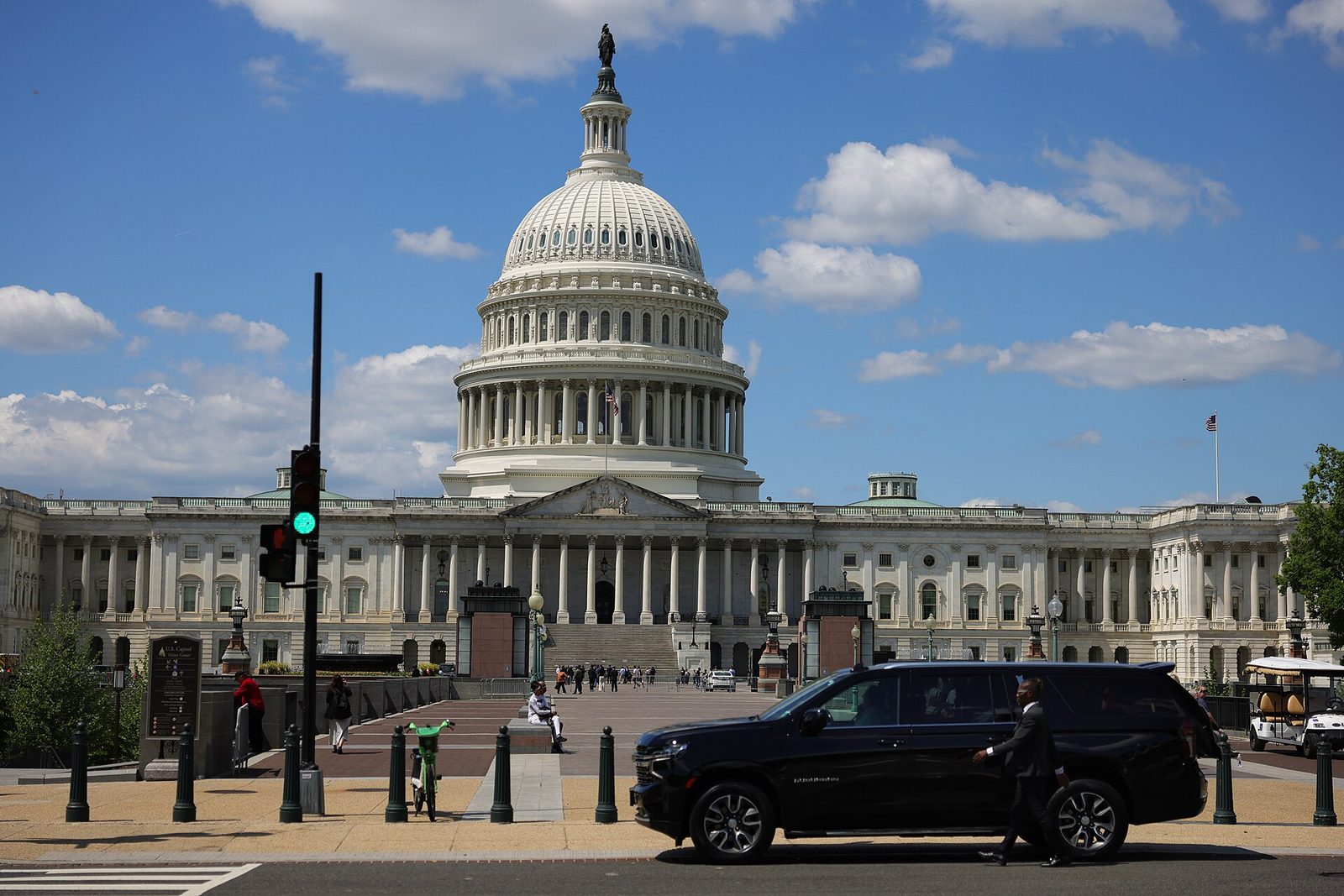
The U.S. Capitol and its dome under a partly cloudy sky, seen from across the street.
File photo: the U.S. Capitol in Washington on April 17, 2026. Photo: European Union, CC BY 4.0, via Wikimedia Commons

The Senate's attempt to take up the Digital Asset Market Clarity Act failed on Sept. 15, 2026, 49 to 50. That was 11 votes short of the 60 needed to start formal debate.

The House passed the bill in July 2025, 294 to 134. The Senate Banking Committee approved its own version 15 to 9 on May 14, 2026.

The bill would make the Commodity Futures Trading Commission the main regulator for much of the crypto industry, while the Securities and Exchange Commission would keep oversight of digital securities.

The Senate vote fell short amid Democratic objections tied to President Donald Trump's crypto wealth and ethics rules for officials. With the August recess gone without another vote, the lame-duck session after the midterm elections is widely seen as the bill's last realistic chance in this Congress, Crypto Briefing reported.

For people who own crypto, nothing changes yet. The SEC and CFTC keep their current powers, and the failed vote created or removed no rules.

Sources

Crypto

SEC Enforcement Cases Fall to Their Fewest Since 1991

The Securities and Exchange Commission filed 348 enforcement actions in fiscal 2026, down 23.7 percent from 456 a year earlier, the agency said Nov. 10. A Reuters review found it was the fewest since 1991. Standalone actions fell to 235 from 303. The cases included alleged bitcoin mining fraud and a settlement over failures in FTX's audits, Cointelegraph reported. It was Chair Paul Atkins' first full fiscal year in office.

Sources

Global markets

Watch: Bloomberg on markets before Nvidia's earnings and the chip rule

Two Bloomberg Television segments from Tuesday morning.

Bloomberg Television, Stocks Waver Ahead of Nvidia Earnings; Trump Kicks Off Asia Trip (Nov. 17). Bloomberg Television on YouTube

Bloomberg Television posted two Tuesday-morning market segments: one on stocks wavering ahead of Nvidia's quarterly report and President Trump's Asia trip, and one on the Commerce Department's new license rule for advanced chips sent to five more countries, which we covered Monday. Nvidia reports after the market closes Tuesday. Views from anchors and guests are their own.

Hosts' opinions are their own; this is not financial advice, so check how any account or rule applies to your situation. Creators don't pay to be featured, and we note sponsored segments and referral links.

Sources

Trade & tariffs

Watch: Maurice Obstfeld gives PIIE's Richard N. Cooper lecture

The Peterson Institute posted its fourth annual Richard N. Cooper Memorial Lecture.

Peterson Institute for International Economics, fourth annual Richard N. Cooper Memorial Lecture featuring Maurice Obstfeld (posted Nov. 13). Peterson Institute on YouTube

The Peterson Institute for International Economics posted its fourth annual Richard N. Cooper Memorial Lecture, given by economist Maurice Obstfeld, a former chief economist of the International Monetary Fund. The views in the lecture are the speaker's own; the WTO's latest count of trade restrictions is in today's Trade & tariffs story.

Hosts' opinions are their own; this is not financial advice, so check how any account or rule applies to your situation. Creators don't pay to be featured, and we note sponsored segments and referral links.

Sources

Trade & tariffs

WTO Counts a Record $5.4 Trillion of Imports Under Trade Restrictions

New restrictions in the first half of 2026 already outnumbered all of 2025, but trade-easing steps grew even faster, the WTO said.

Painted illustration of a container truck stopped at a striped barrier at a port checkpoint, with a guard booth, a docked container ship and cranes loading containers.
AI-generated editorial illustration of trade restrictions at a port. Illustration

Governments introduced 333 new trade-restrictive measures in the first six months of 2026, more than the 300 recorded in all of 2025, the World Trade Organization said Tuesday in its latest trade monitoring report, which covers measures through June 30.

Import restrictions in force now cover a record $5.4 trillion of goods, or 21.3 percent of world imports, and export restrictions cover a record $1.5 trillion, the WTO said.

Members also added 466 trade-facilitating measures in the first half, compared with 391 in all of 2025. Export-easing steps covered a record $570 billion, more than five times the 2025 level, much of it temporary action responding to disruptions around the Strait of Hormuz.

Electric vehicles and solar cells were the only sectors where restrictions covered more imports than facilitating measures. Trade remedy probes such as anti-dumping cases ran at 36.3 a month, up from 32.6 in 2025.

WTO Director-General Ngozi Okonjo-Iweala called for "restraint in the use of new trade restrictions" and said she welcomed the trade-facilitating actions.

Sources

Investing

Home Depot's Third-Quarter Sales Rise 4.9 Percent to $43.4 Billion

Comparable sales grew 2.2 percent, and the company laid out its full-year outlook days before Richard McPhail takes over as chief executive.

Painted illustration of an orange shopping cart filled with lumber, paint, a drill, a hose and flowers outside a Home Depot store as shoppers walk in.
AI-generated editorial illustration of Home Depot shoppers. Illustration

Home Depot said Tuesday that sales rose $2.0 billion, or 4.9 percent, to $43.4 billion in its fiscal third quarter. Comparable sales, which strip out new stores, rose 2.2 percent overall and in the U.S.

Net earnings were $3.7 billion, or $3.72 a share, up from $3.62 a year earlier. Adjusted earnings were $3.86 a share, compared with $3.74. Analysts had expected about $3.85 adjusted and $42.8 billion in sales, according to Yahoo Finance.

For the full fiscal year, the company now expects total sales to grow about 4.5 percent, comparable sales about 1.4 percent, and adjusted earnings per share about 2 percent from $14.69.

"Results in the third quarter exceeded our expectations," said Richard McPhail, the company's incoming chief executive. Yahoo Finance reported that McPhail, the chief financial officer, becomes CEO on Nov. 23.

Finance Unc reports economic and market news for information only and does not recommend buying or selling any security.

Sources

notice NAHB/Wells Fargo Housing Market IndexNationwide25 in November 2026 (29 in October); lowest since April 2012checked Nov 17

Housing

Builder Confidence Falls to a 14-Year Low as 46 Percent Cut Prices

The NAHB/Wells Fargo index dropped four points to 25 in November, the lowest reading since April 2012.

Painted illustration of a builder in a hard hat holding blueprints beside a house under construction in a fall neighborhood, with a sign carrying a red price-cut tag.
AI-generated editorial illustration of a homebuilder weighing price cuts. Illustration

Confidence among builders of new single-family homes fell four points to 25 in November, the National Association of Home Builders said Tuesday. Readings below 50 mean more builders see conditions as poor than good. It was the lowest level since April 2012.

A record share for the post-Covid period, 46 percent of builders, said they cut prices this month. The average cut held at 6 percent for the eighth straight month, and 68 percent of builders offered some kind of sales incentive, also a post-Covid high.

All three parts of the index fell: current sales conditions dropped six points to 28, sales expectations for the next six months slipped two points to 30, and buyer traffic fell two points to 16. NAHB said that traffic reading was the lowest in 15 years, leaving aside April 2020. The group pointed to affordability as the main drag.

By region, on a three-month average, the West was weakest at 23 and the Midwest strongest at 35.

For buyers, more price cuts and incentives can mean more room to negotiate on new homes, though mortgage rates and the Fed's next move still set much of the monthly cost.

Sources

Economy

Retail Sales Rise 0.2 Percent in October as Factory Output Edges Up

Shoppers pulled back on cars and other big-ticket goods, while a sharp drop at utilities pulled total industrial production down 0.4 percent.

Painted illustration of a shopper paying by card at a grocery checkout, with a warehouse conveyor of boxes and a car assembly line with robotic arms behind her.
AI-generated editorial illustration of retail spending and factory output. Illustration

U.S. retail and food services sales rose 0.2 percent in October from September, the Census Bureau reported Tuesday, in line with economists' forecasts, Reuters said. September's 0.8 percent gain was left unrevised. The figures are not adjusted for inflation.

So-called core retail sales, which leave out autos, gasoline, building materials and food services and feed into the government's estimate of consumer spending, rose 0.6 percent, Reuters reported, ahead of the 0.4 percent forecast. September's core gain was revised up to 0.5 percent from 0.1 percent. Households spent less on motor vehicles and other big-ticket items.

Reuters noted that income after inflation and taxes fell 0.3 percent in September and that the saving rate dropped to near a four-year low, with more spending going on credit cards.

Separately, the Federal Reserve said industrial production fell 0.4 percent in October after rising 0.7 percent in September. Utility output dropped 4.3 percent and mining fell 0.8 percent, while manufacturing output rose 0.3 percent, helped by a 4.4 percent jump in motor vehicles and parts. Capacity utilization slipped to 76.4 percent, about three points below its 1972-2025 average.

The next big data point for the Fed is the minutes of its last meeting, due Wednesday, ahead of the Dec. 8-9 rate decision.

Sources

Small business

Section 179 and Bonus Depreciation, Explained Before Year-End

Business equipment bought and in service by December 31 can often be deducted in full this year instead of over several. For 2026 the Section 179 limit is $2,560,000.

Painted illustration of a woodworker in an apron going over a form with an accountant at a table in her shop, with a laptop, calculator and desk calendar, and a planer and lumber behind them.
AI-generated editorial illustration of a small-business owner planning year-end equipment purchases. Illustration

Normally the cost of business equipment, vehicles and software is deducted a little at a time over the asset's useful life. Two provisions let a business deduct much more of it in the first year: the Section 179 election and bonus depreciation. Both apply only to property placed in service, meaning set up and ready to use, during the tax year, so a machine ordered in December but delivered in January counts for next year.

For tax years beginning in 2026, the IRS says a business can elect to expense up to $2,560,000 of Section 179 property. That limit shrinks dollar for dollar once the total cost of Section 179 property placed in service during the year passes $4,090,000. Sport utility vehicles are capped separately at $32,000 under Section 179. The deduction also cannot exceed the business's taxable income from active business, so it cannot create a loss on its own; any excess carries forward.

Bonus depreciation is the other route, with different rules: it is not capped at the business's income and applies automatically unless the business elects out. The 2025 tax law changed its rates for property acquired after January 19, 2025; IRS Publication 946 explains how bonus and Section 179 interact for your situation. Many businesses use both.

Where owners go wrong: buying equipment the business does not need just for the deduction, which still costs money; forgetting that a big first-year deduction means smaller deductions later; and mixing personal and business use of a vehicle without records. A large write-off also lowers basis, which matters when you sell the asset. This is squarely a question for your tax professional before you buy, not after.

Sources