A hotter inflation report and a weak note auction pushed the yield that steers mortgage and loan rates up about a tenth of a point, and stocks slipped.
By Finance Unc
The 10-year Treasury yield ended Tuesday, November 10, at 4.98 percent, up 0.10 percentage point from Monday, according to the Treasury Department's daily par yield curve. The 2-year yield, which tracks expectations for the Federal Reserve's next moves, rose 0.17 point to 4.73 percent, and the 30-year rose to 5.35 percent.
The 10-year briefly traded above 5 percent during the day, CNBC reports. Yields rose after the October Consumer Price Index came in at 0.4 percent for the month, above the 0.3 percent economists expected, and after Fed Governor Christopher Waller said a half-point increase in the Fed's rate "should be considered" in December if inflation ran hot. A $42 billion auction of 10-year notes drew soft demand, adding to the pressure; bond dealers were left with 10 percent of it, the most since May, according to Peter Boockvar of One Point BFG Wealth Partners, as quoted by CNBC.
The 10-year yield is a benchmark for 30-year mortgage rates and other long-term borrowing costs. Freddie Mac's weekly survey put the average 30-year fixed mortgage rate at 7.18 percent as of November 5; its next reading is due Thursday.
Stocks fell. The Dow Jones Industrial Average closed down 0.30 percent at 52,231.89, the S&P 500 lost 0.38 percent to 7,520.93 and the Nasdaq Composite dropped 0.74 percent to 25,065.88, TheStreet reports. Nvidia fell 5.47 percent, CNBC reports, a second day of losses as its board investigates reports about CEO Jensen Huang. Brent crude settled at $91.49 a barrel, down 1.17 percent.
The Fed's next decision is December 9, at the end of its December 8–9 meeting. Wholesale inflation figures are due Friday.
October exports rose 35 percent from a year earlier on demand for AI hardware, while European shares traded near a record as oil prices eased.
By Finance Unc
China's trade surplus reached $1.04 trillion in the first ten months of 2026, the fastest it has ever crossed $1 trillion, according to Chinese customs data released Tuesday, November 10, and reported by CNBC. The full-year record is $1.2 trillion, set in 2025.
Exports rose 35.2 percent in October from a year earlier, above the 33.5 percent economists polled by Reuters expected, and imports jumped 41.6 percent, CNBC reports, led by technology goods, copper and energy. China's exports to the United States rose 32.9 percent by value from a year earlier, for a monthly surplus with the U.S. of $32.7 billion. The U.S.-China trade truce, extended in September, runs to January, and Presidents Xi Jinping and Donald Trump are due to meet at the APEC summit in Shenzhen next week.
The International Monetary Fund has repeatedly urged China to rely less on exports and more on household spending. "China remains well on pace for a new record high for the trade surplus by year-end despite a miss in October," Lynn Song, ING's chief economist for Greater China, told CNBC.
In Europe, the STOXX 600 index was up about 0.7 percent in morning trading Tuesday, within 1 percent of its record set in early August, Reuters reported via MarketScreener, as Brent crude fell toward $90 a barrel on easing U.S.-Iran tensions. Banks led the gains and oil shares lagged; German chipmaker Infineon rose more than 6 percent after forecasting revenue growth for 2027.
The final 2027 physician fee schedule also trims payment when a visit and a minor procedure happen the same day.
By Finance Unc
The Centers for Medicare & Medicaid Services has finalized its 2027 Physician Fee Schedule, the yearly rule that sets what Medicare Part B pays doctors and other clinicians, the agency announced this week.
Starting April 1, 2027, approved Accountable Care Organizations, groups of doctors and hospitals that share in savings when they hold down Medicare costs, may reduce or eliminate Part B cost-sharing for many items and services for the beneficiaries assigned to them, CMS says. Whether a particular patient pays less will depend on whether their ACO applies and is approved.
When an office visit and a minor procedure happen on the same day, Medicare will cut payment for the lower-cost service by 20 percent, which CMS says reduces duplicate payment by patients and the program. The rule adds two billing codes for advance care planning and writes into Medicare rules the noncitizen eligibility criteria set by the law CMS calls the Working Families Tax Cuts legislation.
For clinicians, the traditional Merit-based Incentive Payment System reporting option ends with the 2031 performance period, two years later than proposed. "Medicare should reward clinicians for keeping people healthy," Health and Human Services Secretary Robert F. Kennedy Jr. said in the release. CMS Administrator Dr. Mehmet Oz said the rule ends "duplicate billing" and closes "costly loopholes."
Roughly 24 percent of people with a credit record have debt in collections, up from just under 23 percent in 2025, with a median balance of $2,913, according to an Urban Institute analysis of more than 10 million credit records reported by CBS News on November 10. In communities of color the share is 30 percent. About 3 percent have medical debt in collections, with a median of $1,492, and roughly 16 percent of student loan borrowers are behind. Louisiana has the highest share of people with debt in collections. Fifteen states bar providers from reporting medical debt to credit bureaus, CBS reports.
State securities regulators handled 9,044 investigations in 2025 and secured more than $825 million in restitution, fines and other relief, the North American Securities Administrators Association said in its 2026 enforcement report on November 10. They opened 677 new investigations involving digital assets, 215 involving "pig butchering" romance-investment scams, 192 involving impersonation schemes and 181 involving social media fraud, and received 4,690 complaints about misconduct aimed at older investors. Investors can check a broker or adviser and report suspected fraud through their state securities regulator.
AI cloud provider CoreWeave reported third-quarter revenue of $3.66 billion on Tuesday, up 168 percent from a year earlier and above the $3.55 billion analysts expected, and a net loss of $709 million, CNBC reports. It raised its 2026 revenue forecast to $13 billion to $13.3 billion and said its backlog reached $132.5 billion. The company owed almost $47 billion at the end of the quarter, and its shares have lost about 40 percent in the past month as investors pulled back from AI infrastructure stocks. This is news, not a recommendation to buy or sell any stock.
AI-generated editorial illustration of Anthropic's IPO price range. Illustration
By Finance Unc
Anthropic, the AI company behind the Claude models, said in an amended filing Tuesday, November 10, that it will offer 825 million shares at $70 to $78 each and has applied to list on the Nasdaq under the ticker ANT, CNBC reports. At the top of the range the offering would raise up to $64.35 billion; people familiar with the plans told CNBC it is expected to price November 18 and begin trading November 19, with about 20 percent of shares set aside for individual investors. The filing reports $33.24 billion in revenue and a $104 billion net loss for the nine months through September 30, most of the loss tied to changes in the value of convertible notes and derivatives. Finance Unc does not recommend buying or selling any security. Disclosure: this brief was drafted with the help of Claude, an Anthropic product.
AI-generated editorial illustration of record new-vehicle prices. Illustration
By Finance Unc
The average transaction price for a new vehicle reached a record $51,109, about $500 above the December 2025 high and 2.1 percent more than a year earlier, according to a Kelley Blue Book report released Tuesday, November 10, NPR reports. The average used car costs close to $27,000, up 6 percent, Cox Automotive says. Edmunds found buyers financed an average of $44,664 last quarter, and that more than a quarter took loans of 84 months or longer; it puts average auto loan rates at about 11 percent for used vehicles and over 7 percent for new ones.
AI-generated editorial illustration of falling gas and crude oil prices. Illustration
By Finance Unc
The national average for regular gasoline was $3.9788 a gallon on Tuesday, November 10, AAA says, the first reading under $4 in nearly four months and down from $4.56 earlier this year, CBS News reports. Brent crude fell below $90 a barrel Tuesday for the first time since August after President Trump said Monday that the war with Iran could end "fairly soon," CNBC reports; it traded at $90.14 early Tuesday, with U.S. crude near $84.78. The seasonal switch to cheaper winter-blend gasoline is also lowering prices at the pump.
Speaking in London before the inflation report, the governor said a 50 basis point increase "should be considered" if inflation ran hotter than forecast.
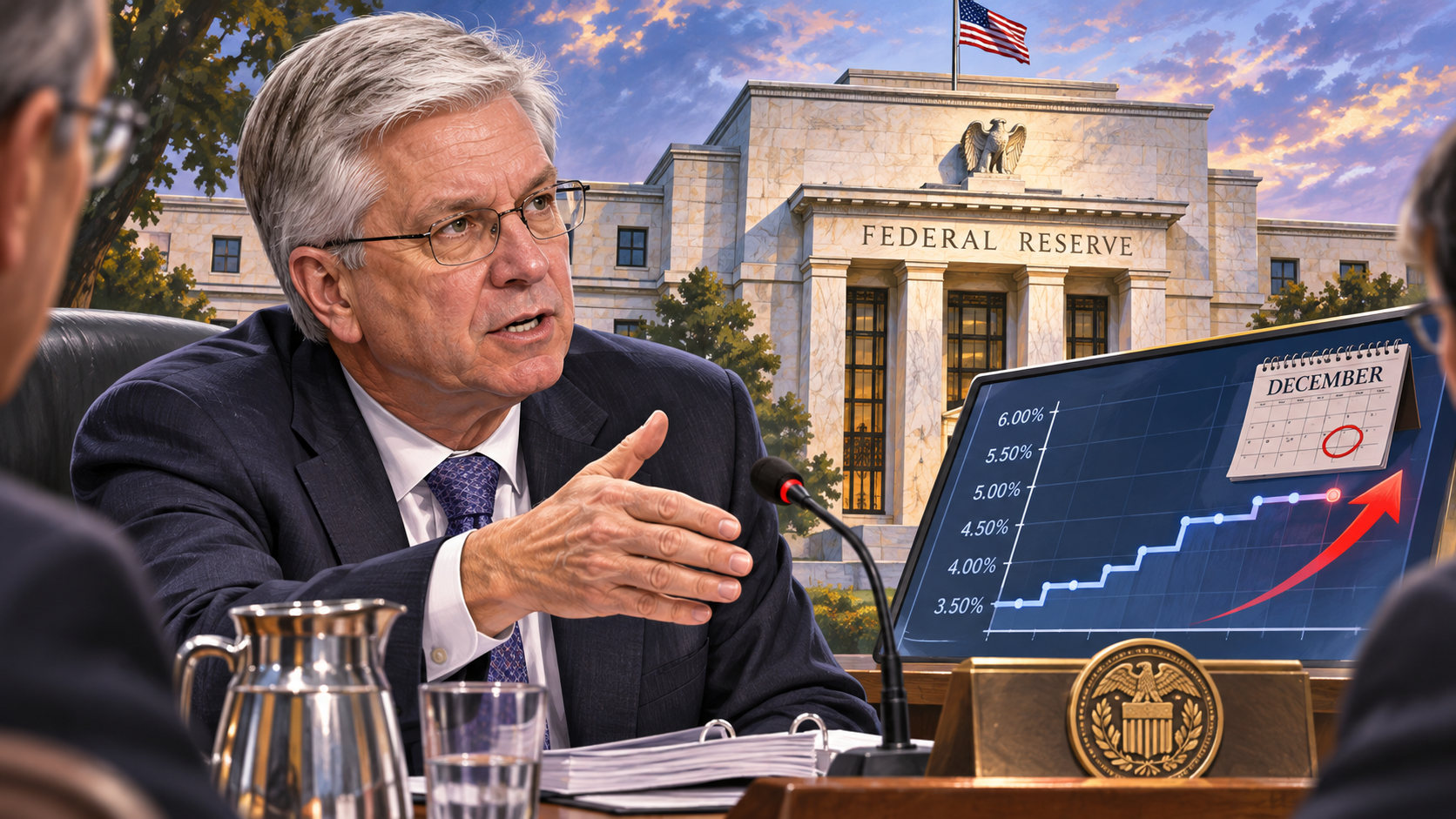
AI-generated editorial illustration of the Fed weighing a December rate hike. Illustration
By Finance Unc
Federal Reserve Governor Christopher Waller said Tuesday, November 10, in a speech in London that he is "leaning toward" supporting a quarter-point interest rate increase at the Fed's December 8–9 meeting, and that a larger move could be needed if inflation readings came in higher than expected, CNBC reports.
"In that case, I believe a 50 basis point hike in the policy rate should be considered at the December meeting," Waller said. "Hiking only 25 basis points would put our credibility at risk, a risk I am not eager to take." He said the Fed's communications had led markets to expect further increases, and that following through matters more than the exact timing.
The speech came hours before the October Consumer Price Index, which rose 0.4 percent for the month against forecasts of 0.3 percent. Before the report, markets priced a better than 80 percent chance of a quarter-point increase in December and no chance of a half point, according to CME Group's FedWatch tool, as cited by CNBC.
The Fed held rates in October, with Governor Lisa Cook and Cleveland Fed President Beth Hammack dissenting, after raising them in September.
Energy rose 0.7 percent and food 0.5 percent. Because of last year's shutdown, there is no 12-month inflation rate this month.
AI-generated editorial illustration of rising consumer prices. Illustration
By Finance Unc
The Consumer Price Index for all urban consumers rose 0.4 percent in October on a seasonally adjusted basis, the Bureau of Labor Statistics reported Tuesday morning, November 10. Economists polled by Dow Jones had expected 0.3 percent, CNBC reports.
Prices excluding food and energy, the core measure, rose 0.3 percent, against expectations of 0.2 percent. Energy prices rose 0.7 percent, food 0.5 percent and shelter 0.3 percent, according to the BLS.
As announced, the release has no 12-month rate for overall prices. The BLS did not collect survey data in October 2025 because of the government shutdown, and it says it "cannot publish 12-month percent changes for October 2026 for indexes where October 2025 data are unavailable." The few 12-month changes it did publish, not seasonally adjusted, include gasoline, up 37.4 percent, new vehicles, up 0.7 percent, and used cars and trucks, down 3.3 percent.
Treasury yields rose after the report. The 2-year yield climbed more than 15 basis points to about 4.70 percent and the 10-year about 7 basis points to roughly 4.94 percent Tuesday morning, CNBC reports. The Federal Reserve's next decision is due December 9, and wholesale prices for October are due Friday.
Open enrollment for marketplace health plans is under way. Prices and subsidy rules change every year, so last year's plan is not automatically this year's best choice.
By Finance Unc
If you buy health insurance yourself, rather than through an employer or Medicare, the Affordable Care Act marketplace at HealthCare.gov, or your state's own exchange, is where you compare plans and find out whether you qualify for the premium tax credit, which lowers the monthly cost. Enrollment for 2027 coverage runs this fall; HealthCare.gov lists the exact deadlines for your state.
Step 1: update your application with your expected 2027 household income and size. The premium tax credit is based on that estimate, and getting it wrong in either direction is settled at tax time: if your income comes in higher than you estimated, you may repay part of the credit when you file. Step 2: compare plans by total yearly cost, not premium alone. A low premium with a high deductible can cost more if you expect to use care. Step 3: check that your doctors, hospitals and prescriptions are in the plan's network and drug list.
Two rule changes are worth knowing about. Treasury and the IRS have proposed narrowing who can claim the premium tax credit starting in 2027 and adding verification before advance payments are made; our October 17 story covers what was proposed, and comments close November 30. And if you are automatically re-enrolled, your plan, premium and credit can all change, so log in and look rather than letting it roll over.
Free, trained help is available through the marketplace's navigators and assisters; HealthCare.gov's local-help search finds them. Be wary of anyone who calls offering to enroll you, and never give your marketplace login to a broker you did not choose.